
End Times Updates
Menengai 8 Super Glorious Healing Service: A Meeting Not Like Any Other
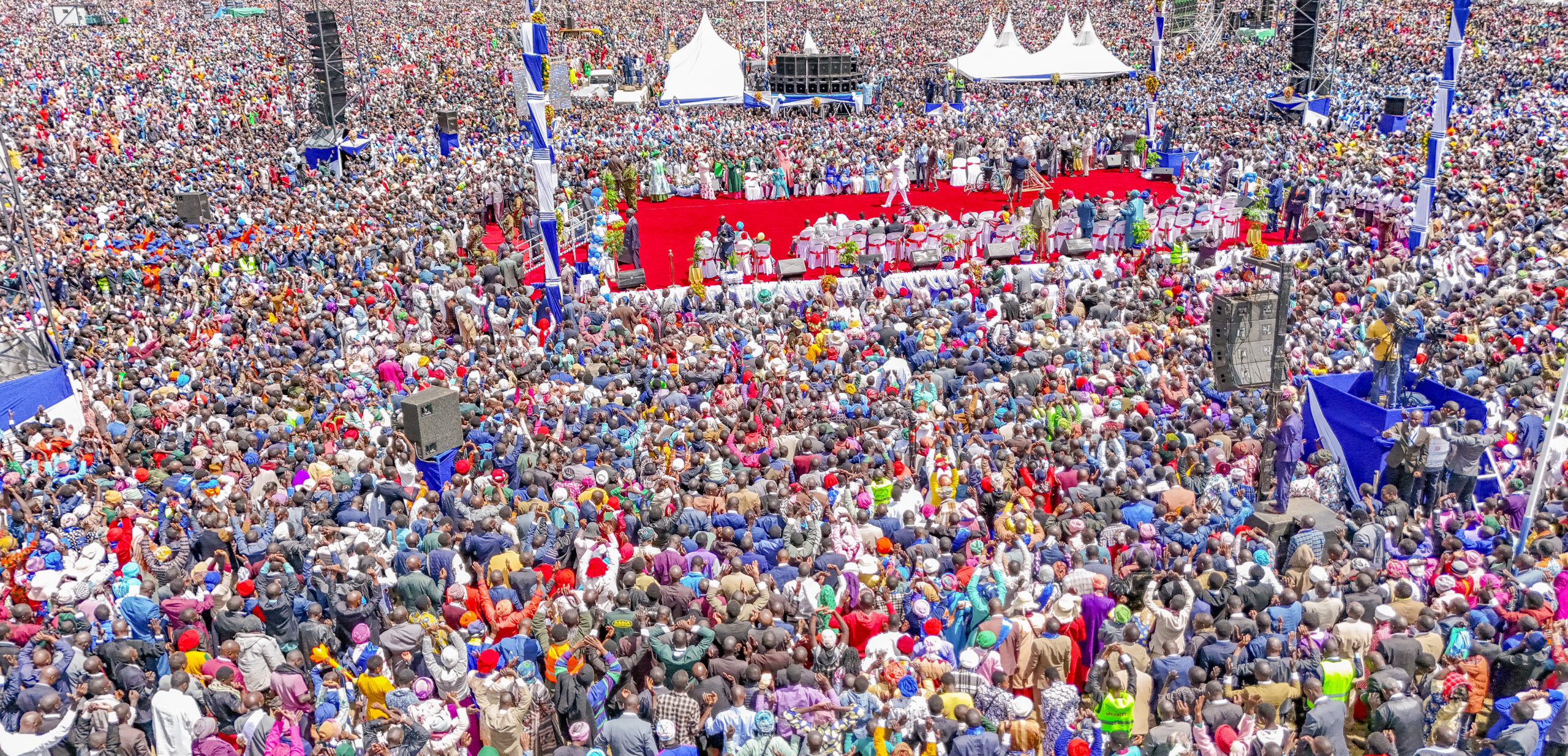
Menengai 8 super glorious healing service. Mega Healings broke out.

BY NKOR MARTINE
The Menengai 8 Grand Mega Healing Service, held on 30th December 2025 at Menengai Grounds in Nakuru, Kenya, has been presented as one of the most intense Christian healing gatherings in recent memory, drawing worshippers from across the country and beyond. The meeting, led under the Ministry of Repentance and Holiness led by Prophet Dr. David Owuor, was characterized by hours of worship,fervent repentance, and bold decrees of healing over cripples, the deaf, the mute, the blind, and those suffering severe spinal and paralysis conditions among many other chronic conditions.
Setting and Spiritual Atmosphere
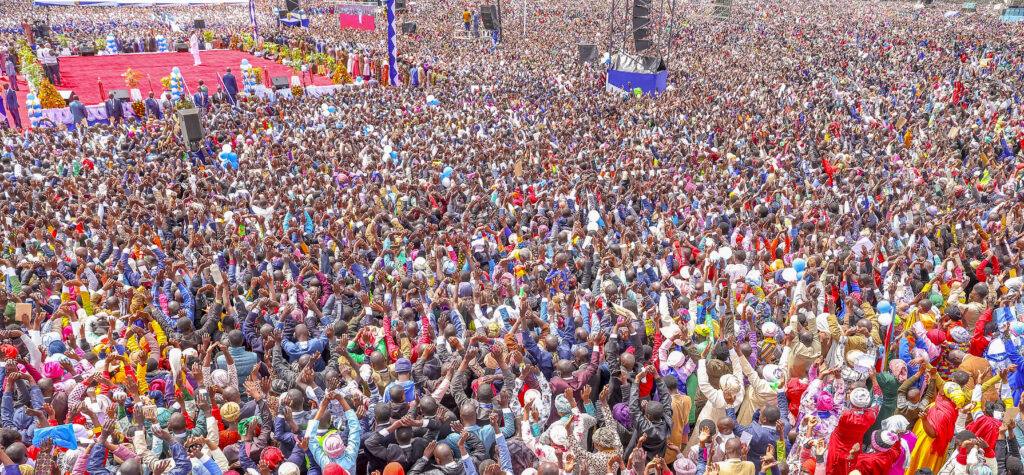
From the early hours of Day, Menengai Grounds transformed into a sea of worshippers, many draped in church colors and carrying banners, united in the expectation of a divine visitation. Multitudes sang in Kiswahili and English, lifting their hands and voices as choirs and worship teams led them in songs declaring God’s holiness, mercy, and power to save and heal. The atmosphere was not that of a typical conference but of a prolonged corporate prayer meeting, with repeated chants of “Halleluya” and “Bwana, nisaidie” (“Lord, help me”) echoing across the field. Worship songs such as “wanijua vyema Bwana” (“You know me well, Lord”) and “nitengeneze Baba, niwe kiumbe kipya” (“mould me, Father, that I may be a new creature”) created a strong sense of personal encounter, as thousands cried out for both inner transformation and physical healing.
Central Theme: Jesus the Healer
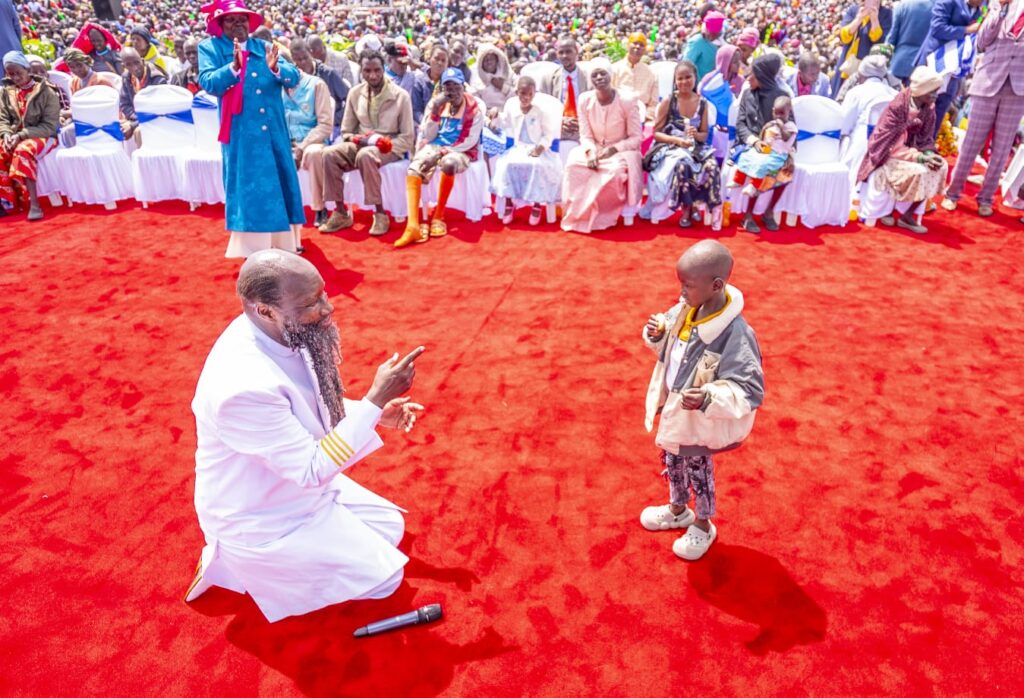
At the heart of Menengai 8 is the proclamation of Jesus as healer of bodies, minds,and souls. Throughout the service, the language of the worship and prayers repeatedly emphasized the Lord as Father, Savior, and Healer, with phrases such as “wewe ni baba yangu” (“You are my Father”) and “Jeova, baba mponyaji wangu” (“Jehovah, my healing Father”). This theological focus provided the foundation on which bold healing decrees were issued over the sick and disabled. The organizers and ministers framed the meeting as a fulfillment of previous prophesies of a “Grand Mega Historic Healing Service,” inviting the sick from hospitals, villages, and distant nations with the expectation that God would demonstrate compassion through visible miracles. In promotional messages leading up to the event, people were urged to bring the crippled, the blind, the deaf, the dumb, and those with severe diseases, with repeated prophecies that “cripples will walk, deaf ears will pop open, blind eyes will open.”
The Healing Decree: “Every Condition Under the Sun”
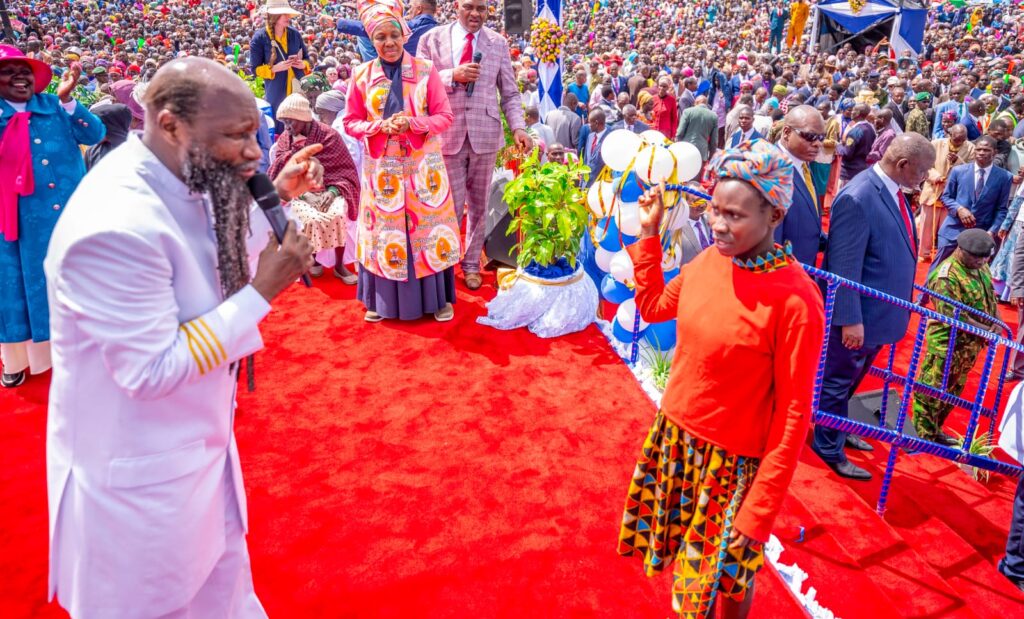
One of the most striking elements of Day 1 was the formal healing decree pronounced over the crowd, extending beyond the physical location of Menengai Grounds to those following the service remotely. The decree deliberately listed categories of affliction in detail, reflecting the belief that no situation was beyond the reach of the power of the blood of Jesus.The declaration included:A command that cripples rise and walk, addressing those who were lame, paralyzed, or had never walked, that they may stand, walk, and even run as a sign of God’s intervention.
A proclamation that deaf ears “pop open” and become sensitive, so that those who had lived in silence would suddenly hear clearly. A command over the mute (dumb) to speak, calling for tongues that had never uttered words to begin pronouncing the name of Jesus and testifying to healing. A decree that blind eyes“pop open”, so that people previously in darkness would see light again, read, recognize faces, and navigate without assistance.A prayer covering spinal cord injuries, paralysis, and severe mobility conditions, addressed through references to “walemavu, mapooza” (the disabled, the paralyzed), and a universal instruction that “everybody now receive your healing.” The decree culminated in the sweeping statement that “every condition under the sun” be submitted to the authority of Jesus’ name, making clear that the service was not confined to a few categories of illness but invited all manner of disease and affliction to bow.
Cripples Walking: Hope for the Physically Disabled
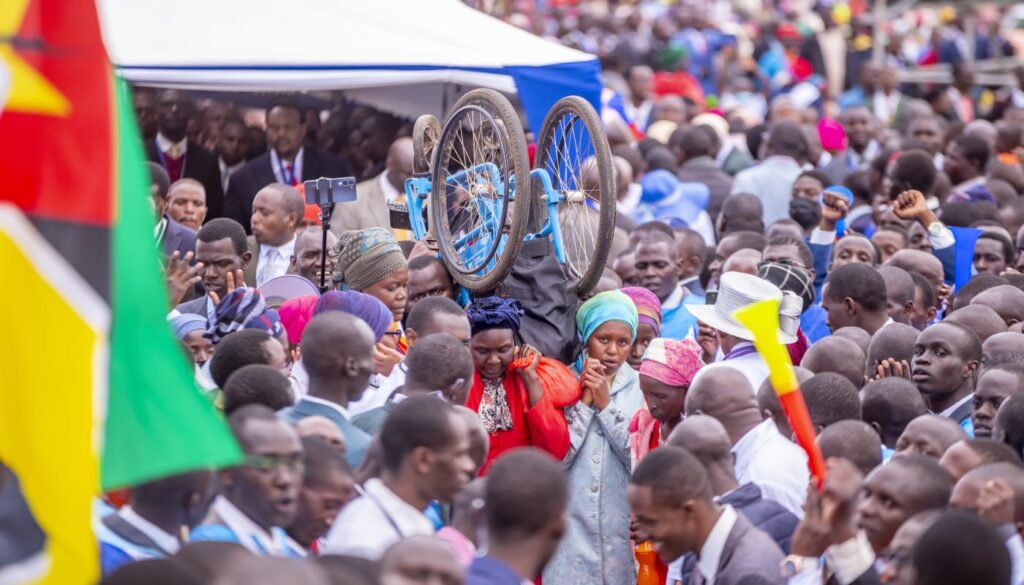
One of the strongest emphases in the Menengai 8 narrative is the expectation that cripples, people who could not walk, whether from birth, accident, or illness, would rise and walk away from their wheelchairs, crutches, and support devices. This expectation mirrors reports and testimonies from earlier Menengai meetings, where the Ministry of Repentance and Holiness has previously documented cases of people who have walked after long-term disability. Announcements and social media posts around Menengai 8 explicitly invited families to bring “the cripple, lame, paralyzed,” promising that the same God who healed in past meetings would move again at Menengai Grounds. During Day 1, the healing decree for cripples was delivered not as a suggestion but as a direct command, relying on a literal reading of New Testament healing accounts and placing the weight of hope on the power of the cross.
Deaf Hear and Dumb Speak: Restoring Communication
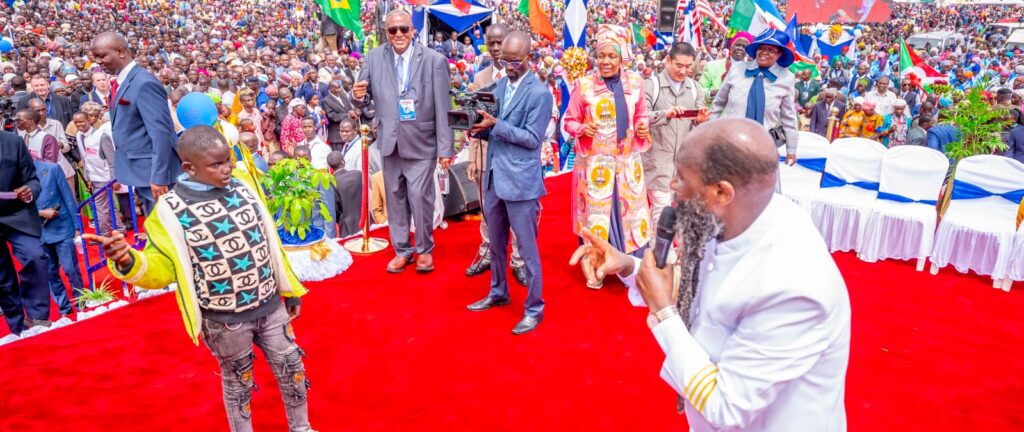
Another key emphasis of the service was on hearing and speech, two senses that are fundamental to human relationships and worship. In the decree, the minister prayed that “the deaf ears pop open and become sensitive,” language that suggests sudden, dramatic change rather than gradual improvement. The prayer explicitly connected this change to “the eternal blood of Jesus,” treating hearing restoration as both a physical and a spiritual sign.
Alongside the deaf, the mute (dumb) were specifically mentioned by Prophet Dr.David Owuor, with the expectation that people who had never spoken would begin to form words, sentences, and testimonies. Within the theology of the meeting, the ability to speak is closely tied to praising God; therefore, the opening of a mute tongue is seen not only as a miraculous happening but as an invitation into active worship and repentance for the coming kingdom of God.
Blind Eyes Open: From Darkness to Light
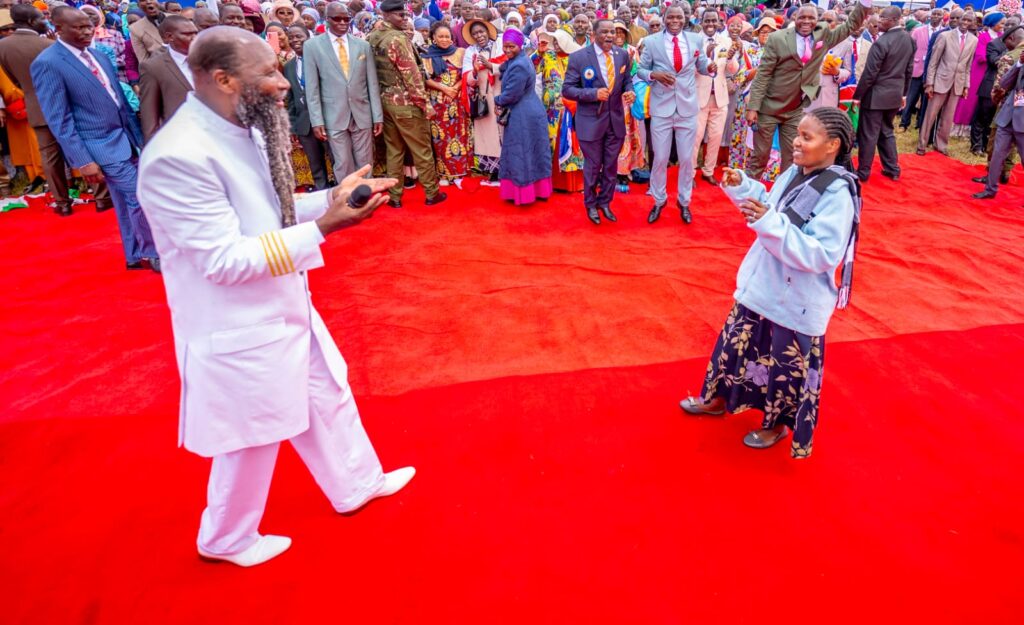
The Menengai 8 healing decree also placed special focus on the blind, with language such as “I command the blind eyes to pop open now… that the blind everywhere may see.” ,by Prophet Dr.David Owuor. This imagery of eyes “popping open” evokes the sudden miracles described in the Gospels and has been a recurring theme in prior meetings of the same ministry, where healing crusades often highlight cases of people reported to have regained sight. The symbolism of blindness and sight carries both physical and spiritual meaning in this context. Physically, the opening of blind eyes allows people to regain autonomy, rejoin schooling or work, and reconnect visually with loved ones. Spiritually, it is framed as a sign of God removing darkness and deception, enabling people to see the path of holiness and preparation for the coming of the Lord more clearly.
Healing of Spinal and Paralysis Conditions
Beyond sensory impairments, the service emphasized healing for spinal cord injuries, paralysis, and other severe conditions affecting mobility. When the decree referenced “walemavu, mapooza,” it encompassed people with broken backs, nerve damage, and long-standing paralysis, many of whom require wheelchairs or constant support. The prayer called for the Lord to “touch cripples” and those with such conditions through the flow of the eternal blood of Jesus, with the aim that they not only stand but also walk, jump, and function without human assistance. In promotional materials, Menengai 8 was frequently described as a “Super Glorious Healing End-Year Service,” reinforcing the idea that even complex medical conditions such as spinal injuries could be reversed in a single prophetic moment.
Testimonies, Expectations, and Public Reaction
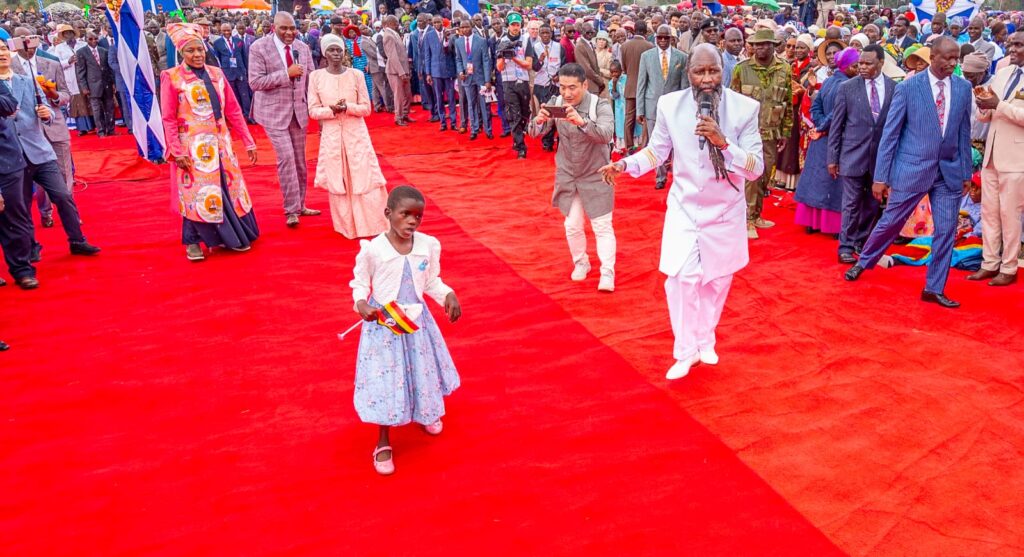
While detailed, independently verified medical documentation is often limited in public reports, social media posts and local live coverage around Menengai 8 highlight testimonies and celebrations of people healed. Clips show crowds rejoicing, some people lifting crutches, and relatives celebrating what they describe as instant changes in their loved ones. At the same time, such large-scale healing claims frequently attract mixed reactions, including deep faith and gratitude from followers and questions or scrutiny from observers who seek more rigorous evidence. Nonetheless, for many believers present at Menengai Grounds, the core experience of Menengai 8 is not just about documented outcomes but about encountering hope, repentance, and a renewed sense that God still intervenes in the affairs of human suffering.
Repentance as the Foundation of Healing
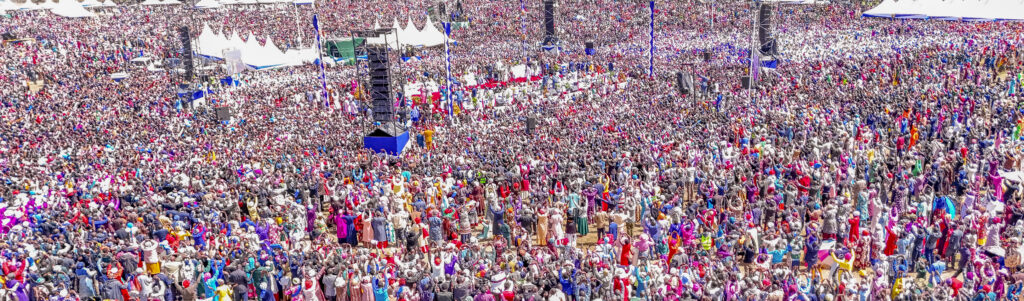
A defining feature of the Menengai 8 Grand Mega Healing Service is that healing is presented as flowing from repentance and holiness, not as a stand-alone spectacle. The long segments of worship include cries such as “sikia maombi yangu” (“hear my prayer”) and “nibadilishe Baba” (“change me, Father”), indicating that many participants view physical healing as intertwined with spiritual restoration.
The ministry’s messages consistently call people to turn away from sin, embrace righteousness, and prepare for the coming of the Lord, teaching that such a posture opens the door for God’s favor, including miraculous healing. In this way, the sight of a cripple walking or a blind person seeing is treated as both a personal miracle and a public call to repentance across the nations.
A meeting Defined by Bold Faith
The Menengai 8 Grand Mega Healing Service on 30th December 2025 stands out for its bold, specific, and public decrees: cripples commanded to walk, deaf ears ordered to open, dumb tongues told to speak, spinal injuries addressed, and blind eyes commanded to see. Whether viewed from within the faith community that organized it or from the broader public square, the event reflects a deep conviction that Jesus still heals “every condition under the sun” and that an entire nation can gather around that hope at the close of the year.

Christian Life
The Tragedy of Moral Decay in Higher Learning institutions
Explore the growing moral decay in higher learning institutions, its causes, consequences, and impact on academic integrity and societal values.
For years, universities, Colleges and other Higher learning institutions were seen as places of intellectual growth and character development. However, many higher learning institutions today have become breeding grounds for moral decadence, where students and even lecturers engage in behaviors that destroy both academic integrity and personal values. From unchecked sexual immorality to rampant substance abuse, violence, and corruption, the decay runs deep.
Sexual immorality is one of the biggest stains on campus life. What was once considered shameful has become normal, even celebrated. Fornication is common, with students engaging in casual relationships driven by lust rather than love. Many young women fall victim to deceitful love affairs, only to be left heartbroken and used.
The normalization of lesbianism and homosexuality has also taken root. Some students, influenced by peer pressure or curiosity, experiment with same-sex relationships, leading to moral confusion and identity crises. Others engage in secret affairs with older partners or even lecturers who manipulate them in exchange for better grades or
financial benefits. Adultery is rampant, with some married lecturers preying on students, turning the academic environment into a den of sexual corruption.
Academic dishonesty is another deep-seated issue. Hard work and diligence are now seen as outdated concepts, replaced by cheating, bribery, and leaked examination papers. Some students no longer feel the need to study, relying instead on corrupt lecturers who sell grades to the highest bidder. The value of education has been reduced to a mere transaction, and many graduates leave university without the knowledge or skills needed to succeed.
Campus life has also become synonymous with drug and alcohol abuse. The pursuit of pleasure has overtaken the pursuit of knowledge. Many students indulge in excessive drinking, turning nights into a blur of parties and reckless behavior. The use of drugs—marijuana, cocaine, and other harmful substances—has become widespread, with some students getting addicted and ruining their futures.
Smoking is no longer seen as a bad habit but as a sign of independence and “maturity.” Shisha lounges and secret drug dens operate freely, drawing in young people who waste their lives in addiction. Many students skip classes, spending their time in bars and drug joints rather than in lecture halls.
As morality declines, violence increases. The lack of self-control and discipline among students has led to tragic incidents of stabbings and deadly fights. Many of these cases stem from toxic love triangles, where jealousy and betrayal push students to take extreme actions.
Reports of students stabbing each other to death over relationships have become disturbingly common.
A boyfriend catches his girlfriend texting another man and, in a fit of rage, pulls out a knife. A girl, blinded by jealousy, attacks a fellow student over suspicions of an affair. Such incidents reveal the deep emotional instability and lack of moral guidance among students, leading to irreversible consequences.
Campus hostels, once meant to be safe spaces for students, have become crime scenes where love-fueled violence erupts. Arguments escalate into fistfights, and fistfights turn into stabbings. Instead of resolving conflicts through dialogue, students resort to deadly force, ending promising lives before they even begin. The inability to manage emotions, coupled with the influence of drugs and alcohol, has made universities hotbeds of violence.
With all these vices comes an inevitable consequence: depression and hopelessness. Many students, trapped in toxic relationships, addiction, and academic failure, fall into deep despair. The pressure to fit into this morally decayed society leaves many feeling empty and worthless.
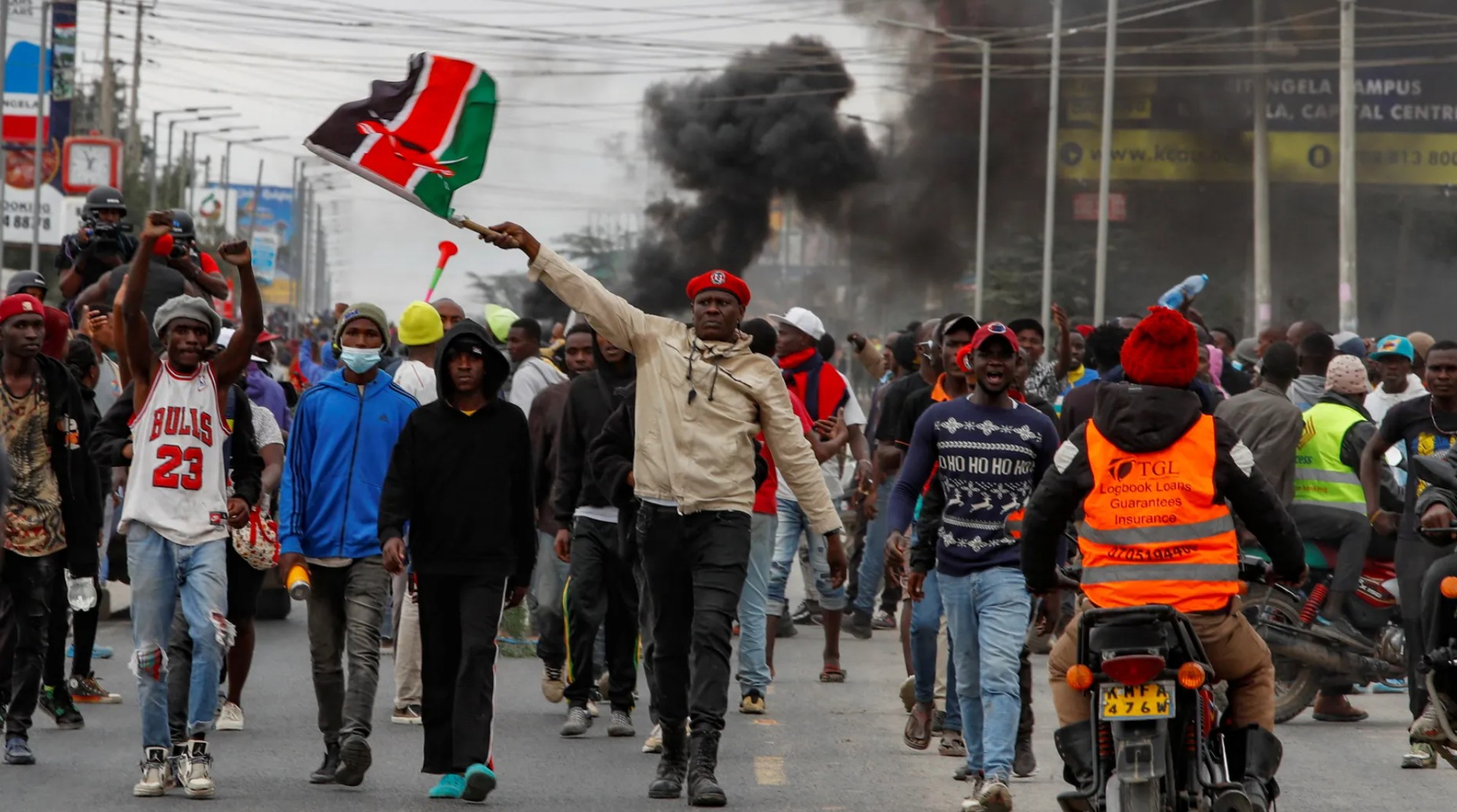
For a nation plagued with incessant successive crises on the verge of imploding, Kenya seems resigned to the fatalistic tendencies. Deficient urgency and abundant indifference appear to be the modus operandi, ‘Borauhai’ being the de facto national motto. So compromised is the national psyche that doing what’s right is scorned and decadence is appreciated.
While once she had grand ambitions of joining the League of the Mighty, Kenya is now contented with feeding on crumbs. Not long ago, she aspired to be the African version of the Asian Tigers, but now a beggar’s bowl goes ahead of her. It is incumbent upon her people, therefore, to rewind and reflect on when she lost her way and restore her Zeitgeist.
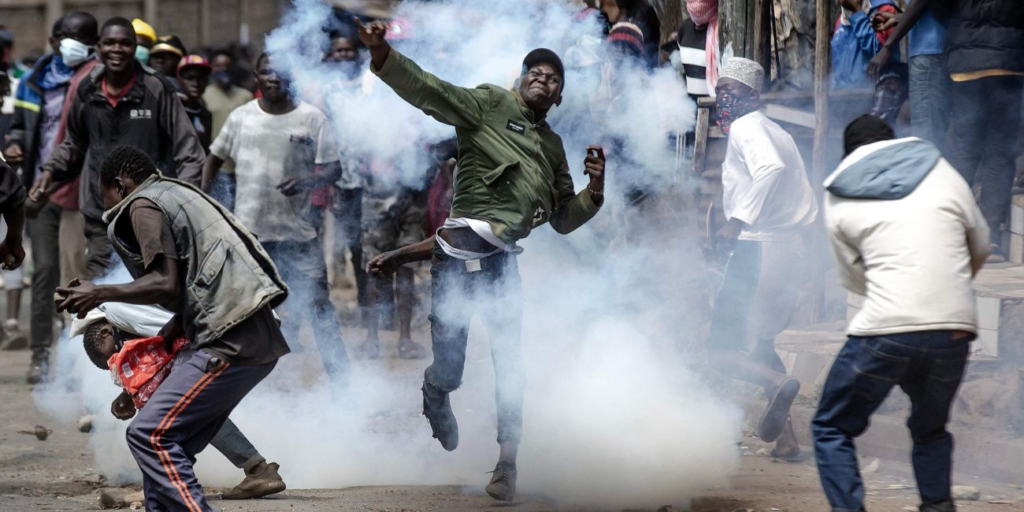
The nation’s soul is at stake; deeply spiritual as she is, the current situation leaves a lot to be desired. Congregations are shrinking while the number of churches is mushrooming exponentially. Suffice it to say, the Church is in a conundrum. While once emanating from the pulpit was God’s love and a place in heaven, the priesthood is now fixated on the materialistic.
There seem to be no limits to the lows the Church is willing to pander to in pursuit
of the worldly.
While Christ Jesus drove out those hawking merchandise in God’s temple, a sad reality of the pulpit is now an auction for the highest bidder, disregarding its sanctity. Politicians now campaign and deceive from the pulpit.

The hapless congregants are left wondering if there is another way, all while charlatans and fraudsters prey on the trusting. All hope seems lost, the gospel binned and replaced by treaties on wealth and mortal indulgence.
Amidst all these controversies, scandals, and leadership wrangles in the church, there appears one bucking this trend. Insisting on the need to go back to the ways of the first church, and the eminence of the Bible [SolaScriptura], is one Prophet Dr. Owour. In the face of ceaseless adversity, he has consistently preached on the coming of Jesus based on the sacred texts with unmatched zest.

Perhaps implosion is not inevitable; there just might be hope for the nation!
End Times Updates
What is Rapture
The concept of the “Rapture” holds a significant place in Christian eschatology, the study of the end times.
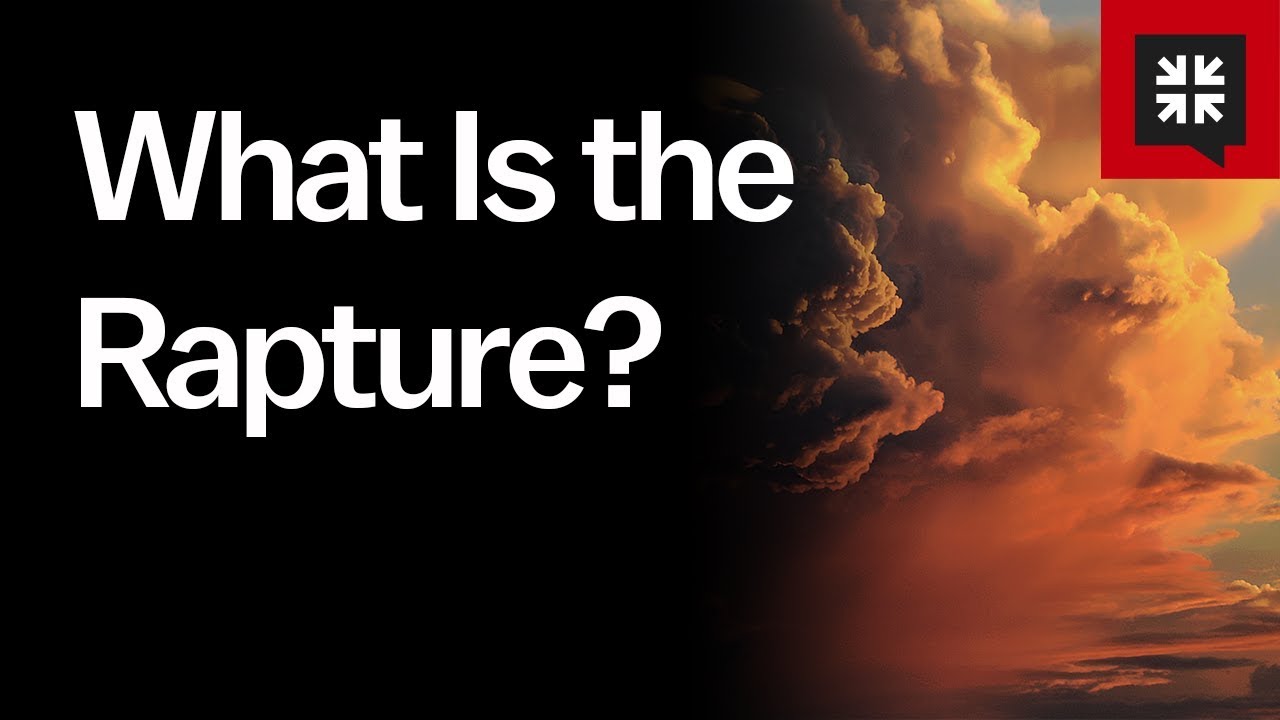
The concept of the “Rapture” holds a significant place in Christian eschatology, the study of the end times. While interpretations of the Rapture vary among different Christian denominations, it is generally understood as an event in which believers in Jesus Christ are caught up from the earth to meet the Lord in the air. This event is associated with the Second Coming of Christ, and it marks the beginning of a series of transformative and apocalyptic events that will culminate in the fulfillment of God’s divine plan for the world.
This essay aims to explore the Rapture in-depth, examining its biblical foundations, theological implications, historical development, various interpretations, and its significance in the broader context of Christian eschatology. Understanding the Rapture requires careful attention to the scriptures, theological viewpoints, and the various perspectives that have shaped Christian thought over the centuries.
1. Biblical Foundation of the Rapture
The term “Rapture” itself is not found in most translations of the Bible. It is derived from the Latin word rapio, meaning “to seize, carry off, or snatch away,” which is used in the Latin Vulgate translation of 1 Thessalonians 4:17. In this verse, the Apostle Paul describes the event where believers will be “caught up” to meet Christ in the air. This passage, along with several other key texts, forms the biblical foundation for the doctrine of the Rapture.
A. 1 Thessalonians 4:13-18
The primary passage in support of the Rapture is 1 Thessalonians 4:13-18, where Paul comforts the believers in Thessalonica concerning those who have died in Christ. He writes:
“For the Lord himself will come down from heaven, with a loud command, with the voice of the archangel and with the trumpet call of God, and the dead in Christ will rise first. After that, we who are still alive and are left will be caught up together with them in the clouds to meet the Lord in the air. And so we will be with the Lord forever. Therefore encourage each other with these words.” (1 Thessalonians 4:16-18, NIV)
This passage describes an event where the living and the resurrected believers are “caught up” together to meet the Lord. The term “caught up” (Greek harpazo) is often understood as a snatching away or a quick and forceful gathering. This is the basis for the concept of the Rapture in many Christian teachings, which hold that the faithful will be taken up to be with Christ before a period of great tribulation on earth.
B. 1 Corinthians 15:51-52
Another key passage is found in 1 Corinthians 15:51-52, where Paul writes about the transformation of believers at the resurrection:
“Listen, I tell you a mystery: We will not all sleep, but we will all be changed—in a flash, in the twinkling of an eye, at the last trumpet. For the trumpet will sound, the dead will be raised imperishable, and we will be changed.” (1 Corinthians 15:51-52, NIV)
This passage provides a further description of the transformation of believers, as they are changed in a moment at the sound of the last trumpet. It echoes the idea of a sudden, dramatic event where the faithful are transformed and taken to be with the Lord.
C. Matthew 24:36-42 and Revelation 16:15
Though not directly mentioning the Rapture, passages like Matthew 24:36-42 and Revelation 16:15 are often cited to support the belief in a separation between the righteous and the wicked in the end times. In Matthew 24, Jesus speaks of the suddenness of His return, comparing it to the days of Noah when people were taken and others left behind:
“Two men will be in the field; one will be taken and the other left. Two women will be grinding with a hand mill; one will be taken and the other left.” (Matthew 24:40-41, NIV)
Some interpret this as a reference to the Rapture, where believers are taken while others are left behind. Similarly, in Revelation 16:15, a warning is given to stay awake, which some interpret as a call for readiness for the Rapture.
2. Theological Interpretations of the Rapture
Over time, different Christian denominations and theologians have developed varying interpretations of the Rapture. These interpretations generally fall into four main categories: Pre-Tribulation, Mid-Tribulation, Post-Tribulation, and Pre-Wrath Rapture. Each perspective holds different views about when the Rapture will occur in relation to the Tribulation—a seven-year period of intense suffering and judgment described in the Bible.
A. Pre-Tribulation Rapture
The Pre-Tribulation Rapture theory posits that Christians will be taken up before the Tribulation period begins. This view became especially popular in the 19th century with the rise of dispensationalism and was made widely known through the writings of John Nelson Darby and the Left Behind series of novels. According to this view, the faithful are removed from the earth to avoid the coming wrath, and the Tribulation period is seen as a time of judgment for the unbelieving world.
- Support for Pre-Tribulation Rapture: Proponents of this view often cite 1 Thessalonians 4:16-17 and 1 Corinthians 15:51-52 as evidence that believers will be taken before the period of suffering. They argue that the Church is not destined for wrath, as seen in passages like 1 Thessalonians 5:9: “For God did not appoint us to suffer wrath but to receive salvation through our Lord Jesus Christ.”
- Theological Implication: The Pre-Tribulation Rapture emphasizes God’s grace and mercy toward His people. It views the Church as distinct from Israel and sees the Tribulation as primarily focused on the Jewish people and the nations that have rejected Christ.
B. Mid-Tribulation Rapture
The Mid-Tribulation Rapture theory suggests that believers will be caught up at the midpoint of the Tribulation, after three and a half years of intense persecution and suffering. This view posits that Christians will experience the early part of the Tribulation but will be spared from the worst of God’s wrath, which is believed to occur during the second half of the Tribulation.
- Support for Mid-Tribulation Rapture: Advocates of this view point to Revelation 11:15-19 and the trumpet judgments as evidence that the worst part of God’s wrath comes after the first three and a half years. They argue that the “last trumpet” mentioned in 1 Corinthians 15:52 refers to the seventh trumpet in Revelation, signaling the rapture at the midpoint of the Tribulation.
- Theological Implication: This view balances the belief that Christians will face some suffering during the Tribulation but will be spared from the ultimate judgment that follows. It reflects a view of God as both just and merciful, allowing believers to endure some tribulation but not the full outpouring of wrath.
C. Post-Tribulation Rapture
The Post-Tribulation Rapture theory posits that believers will be taken up at the end of the Tribulation, after enduring the full seven years of suffering and judgment. This view holds that the Rapture and the Second Coming of Christ are one and the same event, meaning that Christians will go through the Tribulation but will be caught up to meet Christ as He returns to establish His Kingdom.
- Support for Post-Tribulation Rapture: Those who hold this view emphasize passages like Matthew 24:29-31, which describe the return of Christ after the Tribulation, and argue that the Rapture will occur simultaneously with Christ’s Second Coming. They point to the idea that believers are not promised exemption from suffering and that the Church’s mission includes enduring trials and tribulations.
- Theological Implication: The Post-Tribulation view emphasizes the idea of perseverance and faithfulness in the midst of trials. It teaches that Christians will face suffering for Christ’s sake but will ultimately be delivered and rewarded at the end of the Tribulation.
D. Pre-Wrath Rapture
The Pre-Wrath Rapture theory is a more recent interpretation that suggests believers will be taken up shortly before the outpouring of God’s wrath at the end of the Tribulation. This view combines aspects of both the Pre-Tribulation and Post-Tribulation perspectives, holding that the Church will face the tribulation but will be spared from the worst of God’s judgment.
- Support for Pre-Wrath Rapture: This view emphasizes the idea that the Church will not face God’s wrath but will experience persecution and suffering during the Tribulation. It is based on passages like Revelation 6:12-17, where God’s wrath is poured out after the opening of the seals, which some argue happens near the end of the Tribulation.
- Theological Implication: The Pre-Wrath view sees the Church as undergoing some judgment but ultimately being spared from the worst of God’s wrath. It suggests that God’s wrath is separate from the Tribulation, and the faithful will be taken up just before that final judgment.
3. The Rapture in the Broader Context of Christian Eschatology
The Rapture is often understood within the broader context of Christian eschatology, which includes various events such as the Tribulation, the rise of the Antichrist, the Battle of Armageddon, and the ultimate establishment of God’s Kingdom on earth. Understanding the Rapture requires considering these events as part of a timeline of the end times, as described in the Bible.
A. The Tribulation
The Tribulation is a period of intense suffering and judgment that is described in the Book of Revelation. It is a time when the Antichrist will rise to power, and God’s wrath will be poured out on the earth. While the specific duration and nature of the Tribulation are debated, it is commonly seen as a time of great distress for the world.
- The Role of the Rapture: The Rapture is seen as the event that precedes or coincides with the Tribulation, depending on one’s view. Those who hold to the Pre-Tribulation or Pre-Wrath Rapture view believe that the faithful will be taken up to avoid the suffering of the Tribulation. Those who hold the Post-Tribulation view believe that believers will endure the Tribulation but will be delivered at the end.
B. The Return of Christ
The Second Coming of Christ is the ultimate fulfillment of God’s promises to His people. It is when Christ returns to judge the world, defeat evil, and establish His eternal Kingdom. The Rapture is closely connected to the return of Christ, as believers are taken up to meet Him in the air.
- The Link Between the Rapture and the Second Coming: Some views, particularly the Post-Tribulation view, see the Rapture and the Second Coming as one event. Others, like the Pre-Tribulation view, distinguish the Rapture as a separate event that occurs before Christ’s final return to earth.
4. Conclusion: The Hope and Implications of the Rapture
The Rapture is a doctrine that offers hope and comfort to believers, assuring them that Jesus will return to take them to be with Him. It emphasizes the belief in God’s ultimate victory over sin, death, and evil, and it provides encouragement for Christians to remain faithful in the face of trials. While the timing and nature of the Rapture are debated, its significance lies in its affirmation of God’s promises to His people and the ultimate fulfillment of His plan for salvation and restoration.
Ultimately, the Rapture calls Christians to live with a sense of urgency, hope, and anticipation, knowing that Christ will return to complete the work He began and to establish His Kingdom in power and glory.


Menengai 8 Super Glorious Healing Service: A Meeting Not Like Any Other

The Tragedy of Moral Decay in Higher Learning institutions

The Christian JESUS Religion?
-
 End Times Updates11 months ago
Prophet Dr. Owuor Awakens Brazil: A Call to Holiness to the Contemporary Church.
-
 Bible11 months ago
Israel War With Iran Significance
-
 Bible12 months ago
Israel Releases Palestinian Prisoners in Hostage Exchange
-

 Jesus11 months ago
Raising Children Together: A Biblical Approach to Parenting in Marriage
-
 Bible12 months ago
Do Israelites Use the Bible?
-

 Church History11 months ago
Biblical Principles for Dealing with Conflict
-

 Church History12 months ago
The Seven Seals, Trumpets, and Bowls: God’s Judgment on the World
-

 Jesus1 year ago
The Power of Prayer in Strengthening Your Marriage